
Lessons from a summer at ESRF
Ben Risley supported the Afya Yako survey, tested SurveyCTO instruments, and sat in on enumerator training.
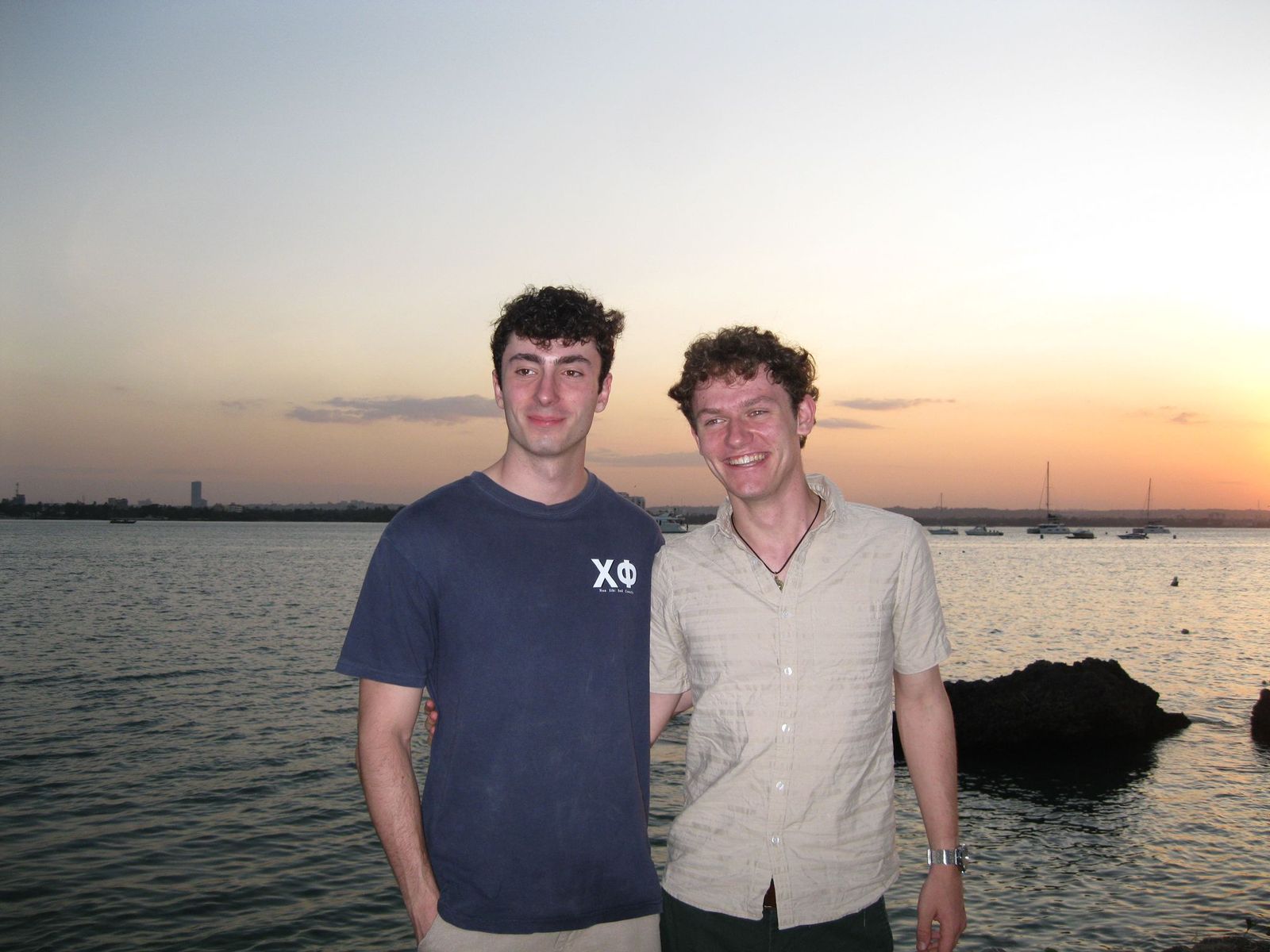
My name is Ben Risley. I’m a rising junior at Lafayette College majoring in Government & Law and Economics with a minor in Data Science. This summer I am participating in an internship with the Economic and Social Research Foundation located in Tanzania. Through this internship, I was afforded the opportunity to travel to Tanzania to work at the ESRF office from May through June 2024.
I was introduced to ESRF while working with Lafayette’s Global Media Lab. As a student researcher on campus, I worked remotely with employees of ESRF and was interested in learning about the process of conducting survey experiments from their end. The Gladstone Whitman ’49 Intern Scholar Program through the Gateway Careers Center allowed me to participate in this internship during the summer of 2024. In this blog post, I’ll talk about my experience working with ESRF in Tanzania and all the valuable lessons I learned there.
ESRF is a well-established research and policy think tank in Tanzania celebrating its 30th anniversary. It has a mission to effectively inform policy and guide government actions with reliable facts and evidence. Working with ESRF, my roles changed nearly every day. I spent the majority of my time working on a public health misinformation project called Afya Yako. Under the guidance of researchers in the Governance and Capacity Development department, I organized data in Excel to be used in a survey for District Medical Officers across the country. While the survey was being administered, I collected data from enumerators and sent follow-up information to respondents. Working on Afya Yako allowed me to learn new data presentation skills as well. Using some of the data they collected, I was able to use QGIS mapping software to generate maps that showed important data points such as vaccination rate and radio transmission allowing researchers to pinpoint key areas of interest moving forward with this project. While initially I wasn’t exposed to QGIS at any level, working with it in this capacity allowed me to work with researchers and explore on my own to solve problems I faced when making these maps. My proficiency with this platform has increased exponentially as a result.
Outside of Afya Yako, I participated in the initial review process for submissions for outside researchers who sought grant money from ESRF. This involved reading through project proposals and making sure they met all application requirements and applying skills from Econometrics to provide comments for future reviewers. A primary method of data collection at ESRF is surveys administered with the use of SurveyCTO. This software is an invaluable tool allowing for mass data collection and analysis but is also used in the research I’m involved in at Lafayette. While at ESRF I tested surveys that were about to be administered and provided feedback to survey designers. This process gave me insight into what a good survey looks like and what the process is for making adjustments in the software. I used this knowledge to experiment with SurveyCTO on my own research project and began to convert my survey from a Google Doc to a working platform.
One of the most unique experiences I had while working in person at ESRF was observing the enumerator training process. Prior to launching a survey, ESRF brings the enumerators in for a training session where they discuss survey questions for last-minute adjustments and inform the enumerators about the purpose of all the questions. I had the opportunity to be a fly on the wall in this process and participate in some adjustments made to the survey that resulted from this meeting. I was interested to see how questions were changed and discussed based on the cultural norms of the area.
One of my favorite days at work was spent watching and discussing a drama that was written in partnership with a local theater program. This drama was meant to convey the results of research conducted by ESRF. One of the biggest problems the researchers have faced is making the results of their data known to the public and creating real change. This drama was an attempt to convey their research findings through an entertainment lens. It was very interesting to hear about the problems facing Tanzanian communities and how ESRF seeks to solve them and I think I provided valuable feedback for future revisions to the drama.
The work culture of ESRF was instrumental in making my experience there so valuable. Every door at ESRF was open and the researchers were always more than willing to help however they could with any task or question I brought to them. One of the researchers was kind enough to give us an extra hour after the workday was over to teach us a basic Swahili survival course. In this session, I was able to learn the basics of Swahili which will be foundational to my future pursuit of the language. Through these classes, we were brought to the Kariakoo market and explored what it was like to shop in the biggest market in Dar es Salaam.
I learned a lot about future career environments from this internship and some valuable lessons to take away from ESRF. The most important was assertiveness. There were times during this internship when I was nervous to ask for help or bring up a problem. What I often found is that when I talked to the people I was working with, they were more than willing to guide me to the answers to my questions. They preferred that I have the answers instead of working blindly and this encouraged me to ask more questions and learn more from them. When I brought up contributions for projects, I found that those contributions were heard and taken into consideration. I appreciated how ESRF made me feel like a part of their team even though I was there for such a short time.
I took so much away from my time spent with ESRF that it is difficult to convey how much each day of work impacted me and my future career goals. Working with researchers on Afya Yako and other projects made working with ESRF an experience that, if I could do it again, I would do without hesitation. I would encourage anyone interested in international politics or government to engage themselves in an internship with ESRF or a similar organization. Thank you to all the researchers at ESRF for making my internship experience so formative and memorable. I can confidently say that I will find a way to come back to Tanzania and work with you all in the future.