
Beach cleanups and solar lanterns in Dar es Salaam
Athena Wagner worked with CoastClean Tanzania and analyzed how health and climate news affect demand for solar lanterns.
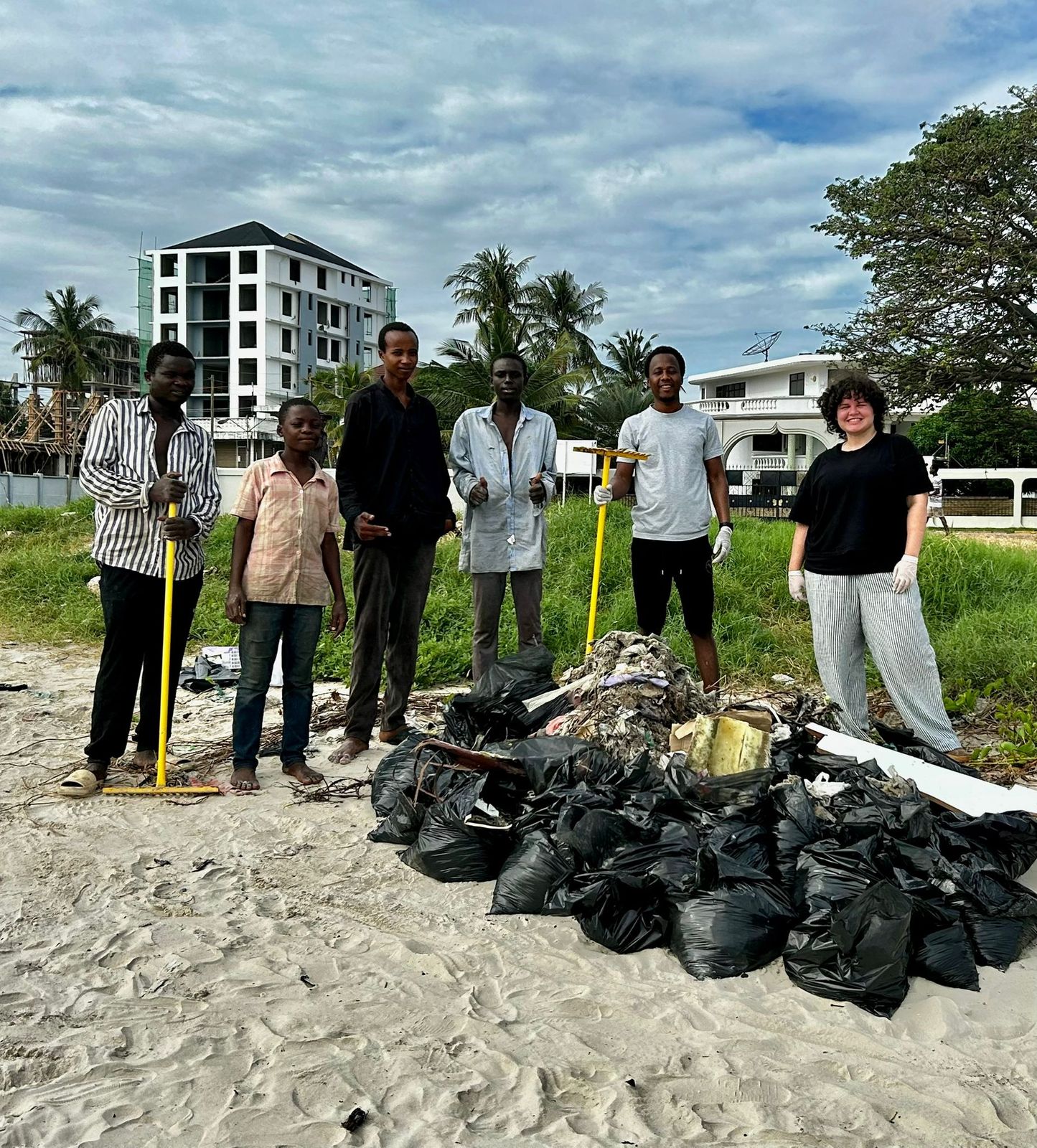
Throughout my college career, I have developed a passion for political science and environmental studies, which is why I was all ears when I heard that Dar es Salaam’s beautiful beaches are in dire need of help. That’s where Zakayo Zakaria, a research fellow and Monitoring and Evaluation Expert at the Economic and Social Research Foundation (ESRF), came in. The view of Msasani Beach’s tranquil waters and vast horizon is tainted by the hundreds of pounds of litter deposited along the shoreline. Zakayo established CoastClean Tanzania in April to engage Dar es Salaam’s at-risk youth in weekly beach cleanups. Both as a student and environmental advocate, I was thrilled to be invited to help Zakayo realize his vision of clean, accessible beaches.
I was fortunate enough to spend the month of June 2025 in Tanzania interning with ESRF, giving me the perfect chance to explore potential research interests and connect with some incredible people. Shortly after landing in Dar, I was taken to dinner by Zakayo and Salma Emmanuel, whom I talked to about our shared interest in renewable energy. From there, in addition to helping with CoastClean, I was able to work with her and Professor Dylan Groves in analyzing data and writing a paper on the influence of health news and climate news on Tanzanians’ willingness to buy solar lanterns. This project gave me exposure to software systems like RStudio and QGIS, allowing me to view data in multiple ways and draw conclusions from those results.
While in Tanzania, I observed how the booming and bustling nature of the city led to increased liter, waste mismanagement, and pollution. On my second day in Dar, I took a Sunday afternoon stroll along Coco Beach and noted that despite the waste accumulating on the sand and in the water, children still ran up and down the beach, laughing and playing; men and women sat or walked along the shore, enjoying the view and each other’s company; and vendors, restaurants, and shops all promoted their array of souvenirs and services. This, to me, stressed the importance of safeguarding the beach’s health.
After participating in one of the CoastClean cleanups, I used the information I gathered to begin paving the path forward. Zakayo and I identified safety, consistency, and quality as three areas of top importance. Since then, my work with CoastClean has largely consisted of outreach to other organizations, maintaining a social media presence, and fundraising. I am excited to continue my work with Global Media Lab and CoastClean Tanzania.
Outside of research work and CoastClean, this trip created many fun opportunities for me to explore Tanzania. My fondest memory is from my weekend trip to Zanzibar with my colleague Bode Brewer. After dinner, we decided to take a shortcut from the beach we were on to the beach connecting to our hotel, which involved hopping along rocks to avoid the high tide. When we made it back safely, we were greeted by the clearest sky and brightest stars I have ever seen. We spend hours admiring the view and enjoying the slow, quiet crash of the waves. With this being one of my first extended trips abroad, I can say with confidence that my experience with ESRF and Global Media Lab has broadened my way of thinking and grown my sense of adventure.